Visual field screening in just 3–4 minutes per eye – whether in the clinic or on site.
A true hemispherical perimeter in a compact design, meeting the technical specifications of the latest German Ophthalmological Society (DOG) recommendations for automated perimetry. Ideal for occupational health, workplace health and traffic medicine – both in the clinic and in mobile settings.
Available with Sophia, the digital voice assistant for perimetry, providing guided multilingual patient instructions and a streamlined examination workflow.
Compact & portable: 30% smaller than the Perivist® Compact II, with a compact footprint and low weight – designed for easy transport.
Compliant with the German Driving Licence Ordinance (FeV) & reliable: Exceeds the technical requirements of the German Driving Licence Ordinance (FeV, Annex 6.2), providing a dependable basis for clinical assessment.
Fast & efficient: Approximately 3–4 minutes per eye with good patient cooperation.
Automatic retest: If abnormalities are detected, the test grid is automatically refined, eliminating the need for manual retesting.
User-friendly: The Vistec App guides users through the examination, with direct data export to your practice management system via the GDT 2.10 interface.
High-quality data: Camera-based fixation monitoring and real-time validity indicators (e.g. false-positive and false-negative responses, threshold monitoring) ensure reliable test results.
Sophia Voice Assistant: Supports examiners, particularly those with limited experience, throughout the examination process. It also provides patient instructions in up to 23 languages, making testing easier in multilingual environments and helping to overcome language barriers.
New Exterior Features
Automatic chin rest adjustment with eye tracking: Eye-tracking technology automatically adjusts the chin rest to the correct height, making it easier for examiners to ensure the patient is positioned correctly
Blue LED guidance strip with diffuse ambient lighting: An elegant visual guide for the examiner in darkened examination rooms, without affecting the examination.
Side shields: Enhanced protection against oblique ambient light for more stable and reliable measurement conditions.
Patient response button: More durable than the previous Compact II design and provides audible click feedback. Magnetically attached to prevent snagging on brackets or holders, featuring a slimmer design that is easy to clean.
Instrument stand: An optional instrument stand can be fitted to achieve a more ergonomic seating position for the patient during the examination.
Forehead rest with positioning guides: Integrated visual markers indicate the correct examination sequence – first the right eye, then the left eye. This guidance feature is included as standard.
Practical Applications
Application
Benefits of Perivist®
Driver licensing examinations (FeV)
Standard-compliant test programmes for efficient visual field assessment in accordance with the German Driving Licence Ordinance (FeV).
Fitness-for-work assessments for driving, control and monitoring tasks (E FSÜ, formerly G 25)
Simple, intuitive test procedure that requires minimal examiner guidance.
Fitness-for-work assessments for working at heights (E ABS, formerly G 41)
Mobile examinations can be performed directly at the workplace, eliminating the need to transport employees.
Traffic medicine and aviation medical examinations
Comprehensive peripheral visual field assessment (up to 80° eccentricity) for fitness-to-drive and pilot medical evaluations.
Workflow optimisation
Reduced waiting times, faster diagnostics and improved patient satisfaction.
Compliance
Meets the technical equipment requirements of the German Driving Licence Ordinance (FeV). For officially mandated specialist assessments, please refer to the German Ophthalmological Society (DOG) list of approved devices.
Preconfigured Test Programmes
FeV – Driver licensing examinations in accordance with the German Driving Licence Ordinance (FeV)
E FSÜ – Fitness-for-work assessments for driving, controlling and monitoring tasks (formerly G 25)
E ABS – Fitness-for-work assessments for work at heights (formerly G 41)
E KOS – Fitness-for-work assessments for artificial optical radiation (formerly G 17)
E NOS – Fitness-for-work assessments for natural optical radiation
Aviation Medicine – Pilot medical examinations
Corrective Lens Calculator: Determines the appropriate corrective lens power more quickly, reducing the need for trial adjustments at the instrument. The patient’s refraction and spectacle prescription are documented automatically.
The software also calculates the spherical equivalent, an important parameter for applications such as driver licensing examinations (FeV) and rail driver medical assessments
Automatic centring of the corrective lens holder The corrective lens holder is centred automatically, ensuring fast, accurate and convenient positioning throughout the examination.
Perimetry colour mode (barrier-free): The examination interface is designed for examiners with colour vision deficiency, while examination reports can still be printed in colour if required.
Real-time display of validity criteria Supports active patient guidance during the examination, for example:
“Please press the button only when you see a light stimulus.” “Please keep looking straight at the fixation target at all times.” For easier assessment of patient cooperation, the software displays the validity criteria recommended by the German Ophthalmological Society (DOG), including false-positive and false-negative responses, in real time.
How the examination works
Select the examination in the Vistec App.
Position the patient with a single click using eye tracking.
Camera-based fixation monitoring continuously checks patient fixation and cooperation throughout the examination.
Abnormal findings? The automatic retest immediately refines the test grid for a more detailed assessment.
Review, print or save the results as a PDF, then transfer them directly to your practice management system via the GDT 2.10 interface
Übersichtlicher Befund
Nach der durchgeführten Untersuchung werden alle relevanten Untersuchungsparameter übersichtlich auf dem Befundausdruck dargestellt. Zusätzlich kann der Befund nun auch individualisiert ausgegeben werden, z. B. in Farbe.
Sie können sich dabei sogar das binokulare Deckfeld zur besseren Perimetrie Auswertung anzeigen lassen.
Verwaltung der Daten
Für die papierlose Verwaltung und das schnelle Aufrufen gespeicherter Befunde sorgt eine integrierte Datenbank.
Zusätzlich können Sie auch direkt Ihren Befund ausdrucken oder als PDF abspeichern.
Zuverlässige Datensicherung
Die Daten werden automatisch mit Beendigung des Programmes gesichert. Ein versehentlicher Datenverlust ist ausgeschlossen.
Unkomplizierter Datentransfer
Die in der Vistec App integrierte GDT-Schnittstelle nach Standard 2.10 ermöglicht die Anbindung an Ihre Verwaltungsprogramme.
Sicher transportieren. Optimal geschützt.
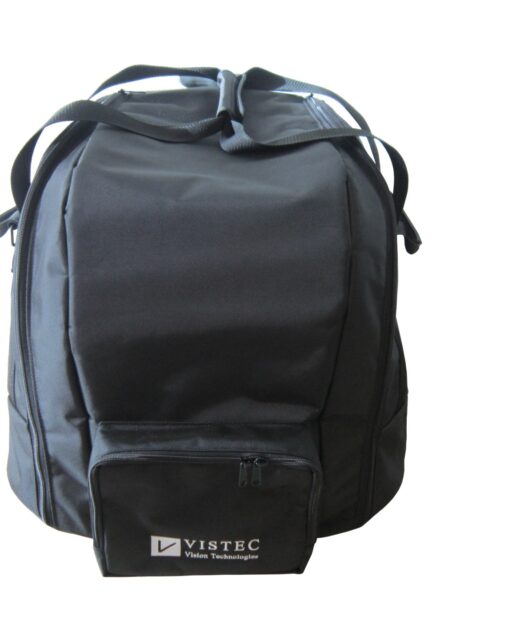
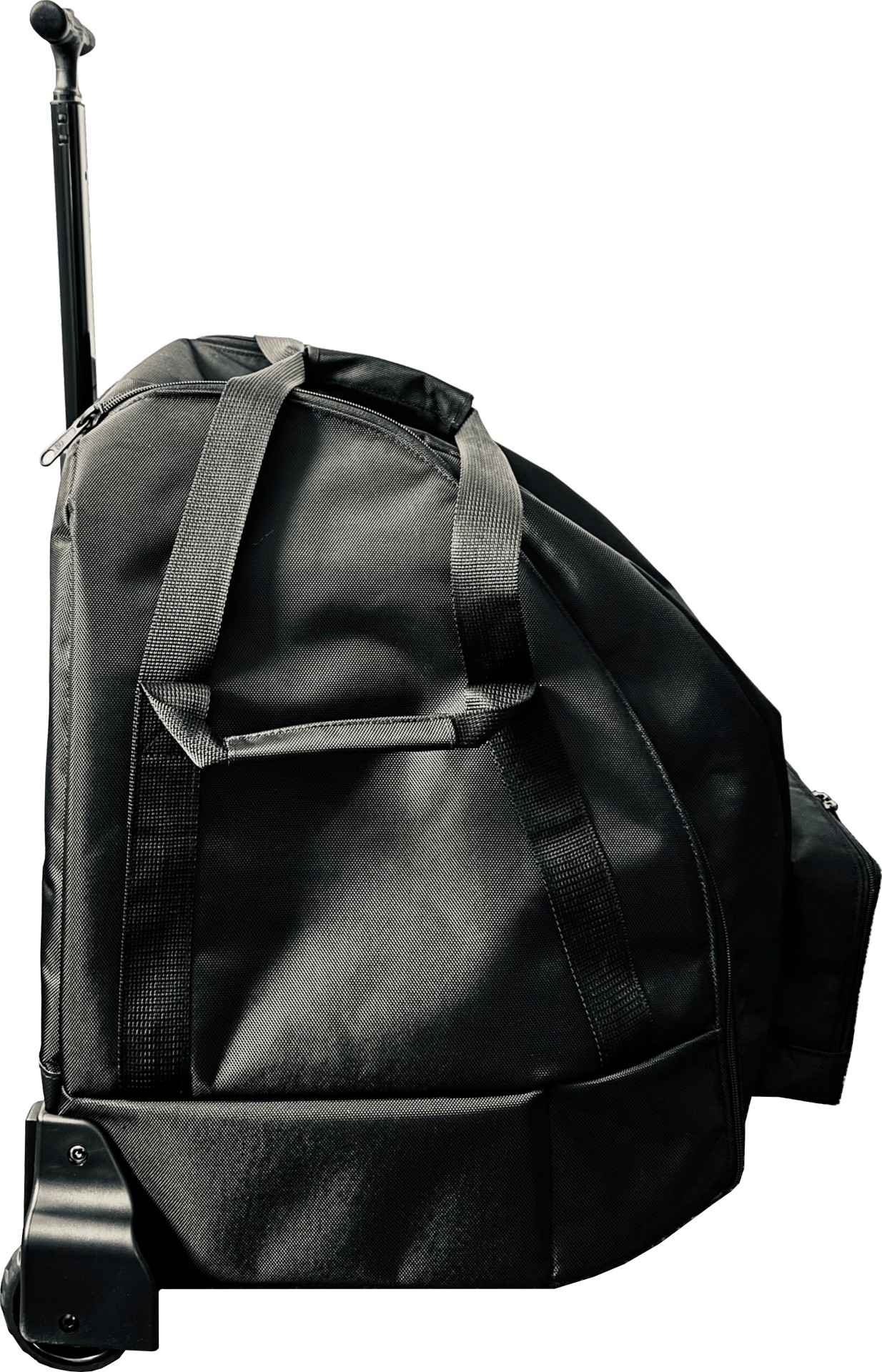
Trolley
Mit dem passgenauen Transporttrolley ist Ihr Perivist Compact III jederzeit sicher und komfortabel unterwegs. Die robuste Ausführung schützt das Gerät zuverlässig beim Transport und bietet ausreichend Platz für das Perimeter inklusive Zubehör – ideal für den mobilen Einsatz in der Arbeits-, Betriebs- und Verkehrsmedizin.
Passgenau für das Perivist Compact III
Sicherer Transport inklusive Zubehör
Robuste Ausführung für den täglichen Einsatz
Ideal für mobile Untersuchungen
Technische Daten
Außenmaße: 560 × 645 × 610 mm (H × B × T)
Gewicht: 4,0 kg
Ergonomisch arbeiten. Komfortabel untersuchen
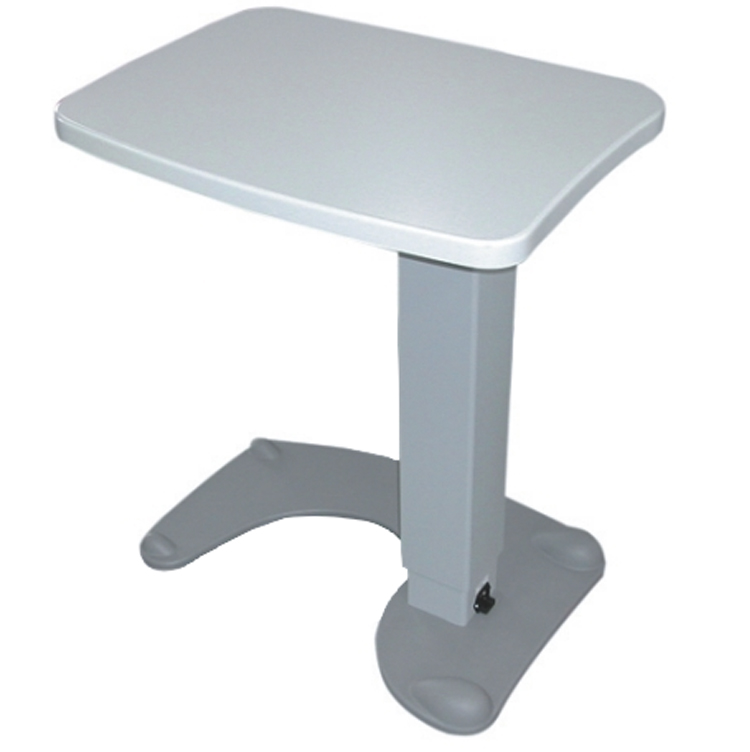
Hubtische
Die höhenverstellbaren Hubtische ermöglichen eine optimale Anpassung an Untersuchende und Probanden. So schaffen Sie eine ergonomische Arbeitsposition, erhöhen den Komfort während der Untersuchung und sorgen für reproduzierbare Untersuchungsbedingungen.
Elektrisch höhenverstellbar
Ergonomische Arbeitsposition
Komfortable Probandenpositionierung
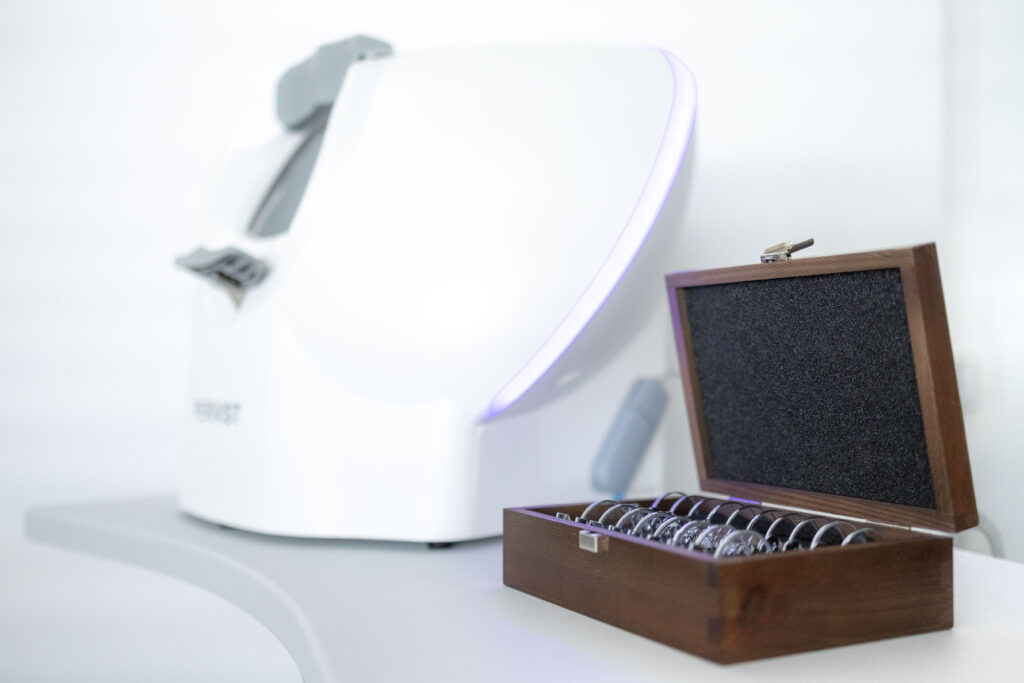
Korrektionsmessgläser
Sollte Ihr Proband fehlsichtig oder altersweitsichtig (presbyop) sein, ist eine Korrektion für präzise Ergebnisse erforderlich. Der Vistec Korrektionsglaskasten deckt den Stärkenbereich von -8 bis +10 dpt ab.
Schutzhaube
Mit der Perivist Schutzhaube decken Sie Ihr Gerät abends ab, um den Reinigungsaufwand zu reduzieren und zu einer langen Lebensdauer Ihres Gerätes beizutragen.
Transluzente Augenklappe – Komfort für präzise Perimetrie
Die transluzente Augenklappe ermöglicht es Patienten, während der Untersuchung beide Augen entspannt geöffnet zu halten. Sie dient zum sicheren Abdecken eines Auges, während das andere getestet wird, und sorgt so für mehr Komfort und präzisere Testergebnisse.